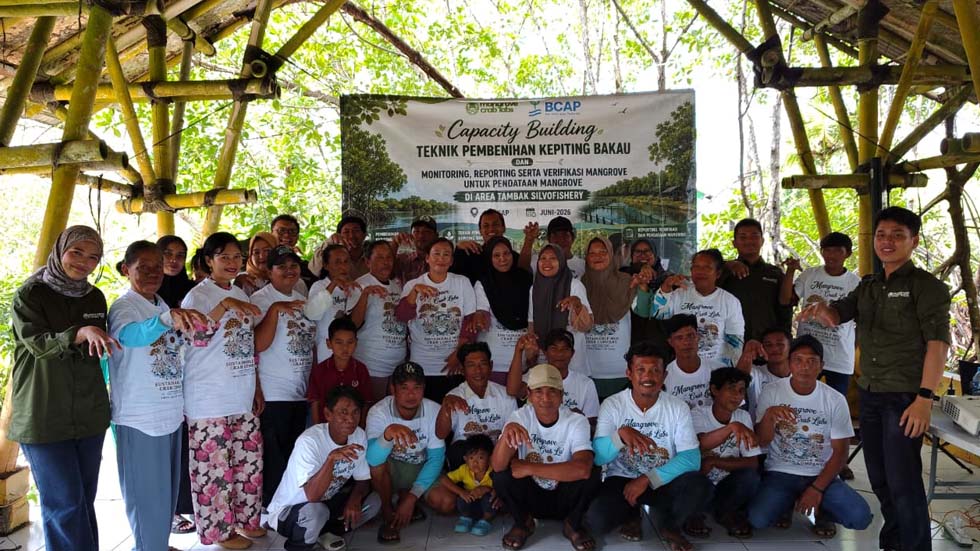
CILACAP, Mangrove Crab Labs — Solidifying its status as a strategic center for ecosystem-based coastal economies, Cilacap Regency recently hosted a comprehensive capacity-building initiative. Driven by a collaborative effort between Mangrove Crab Labs and the Jepara Brackish Water Aquaculture Fisheries Center (BBPBAP), a specialized technical guidance (bimtek) program was rolled out for local coastal communities, cultivators, and key stakeholders.
The region was specifically chosen for its massive potential in silvofishery—a balanced system where crab farming thrives alongside protected green belts. To maximize this local potential and ensure that pond productivity increases without environmental degradation, the intensive training was divided into two critical educational pillars: advanced mud crab hatchery techniques and precise mangrove data management.

Pioneering Independent Crab Hatcheries
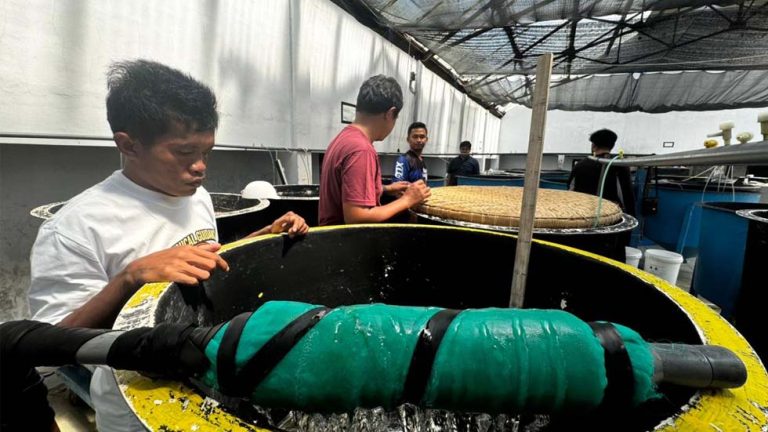
To address the aquaculture sector’s chronic dependence on wild-caught crab seeds, experts from BBPBAP Jepara delivered in-depth theoretical and practical sessions on mud crab (Scylla sp.) breeding. Participants were guided through the entire cultivation lifecycle, encompassing the selection of premium broodstock, spawning management, and the delicate rearing of larvae.
Moving beyond classroom theory, the communities engaged in hands-on practice designed to establish simplified, community-scale hatcheries. By empowering locals with these independent breeding skills, the initiative aims to spark the creation of self-sustaining seed production units across Cilacap’s coastlines, thereby reducing the ecological strain on natural crab populations.
Unlocking Blue Carbon Potential through MRV Systems
Equally important to the aquaculture advancements was the focus on environmental conservation through the Monitoring, Reporting, and Verification (MRV) system. Shifting the traditional approach to coastal management, this phase of the training equipped participants with modern ecological tracking tools. During the sessions, local stakeholders were trained to:
This meticulous data collection is an essential asset for evaluating ecological growth and supporting ongoing mangrove rehabilitation programs. Furthermore, highly validated MRV data acts as a crucial key to unlocking future access to lucrative blue carbon funding schemes.
Ultimately, this holistic transfer of knowledge not only champions sustainable coastal empowerment but also effectively elevates Cilacap from a mere project implementation site into a premier learning destination for other regions aiming to replicate this eco-economic success.